Corset Patterns
I won’t be covering ways to produce a corset pattern for this blog post, laughing moon are a good brand and there’s an array of corset patterns on vena cava. A quick hunt on the net brings up lots more, having said this, creating your very own corset or bodice pattern is actually not a difficult task my first corset bodice was built on a corset design I created by wearing a tight vest and covering my upper body in duck tape. You need to have a pals help if your planning on undertaking this! I then cut down the middle front as well as the back and chop one of the sides into pattern pieces. I then drew round all of them onto tracing paper and modified ;all of them in order to make the waistline slimmer and trimmed the back piece to create space at the laces. I possessed zero previous experience on corset designing at the time and here’s exactly how they turned out–
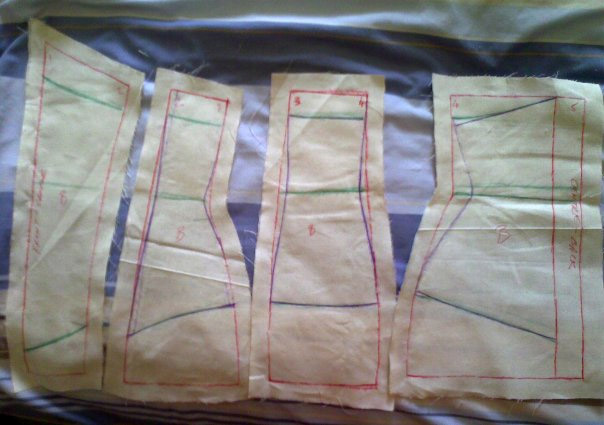
The red lines are the duck tape corset pattern pieces, then I made the earlier mentioned adjustments and reduced the length – illustrated by the blue lines.
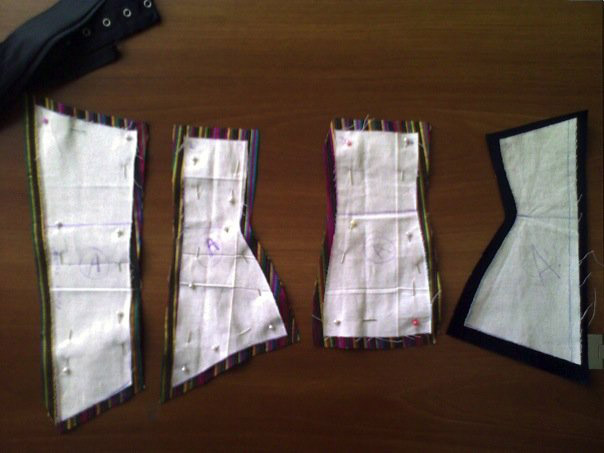
Collecting Together Your Materials
Now the lining should always be coutil! ‘What’s coutil?’ you ask, well, it’s a textile designed solely for the purpose of making a corset from. It won’t stretch as time passes like other cloths can– which could mess up your beautifully fitting corset, it is often quite pricey but you’ll basically only require} half a meter or even less if your very careful. There’s no justification to choosing a cut-rate alternative. It is available in white and black (sometimes nude). If you feel the urge to dye it, this may be done easily as it’s typically made from 100 % cotton or an 80 % cotton 20 % polyester mix. A lower cotton percent can stop the skin breathing. Coutil can be found in a variety of qualities so if you’re acquiring it in a shop give it a decent tug and a feel; it ought to be stiff and withstand stretching.
That said here’s the complete rundown of materials required to sew a single corset:
+ half meter of coutil.
+ half meter of external or fashion fabric.
+ 3 or 4 reels of unbreakable thread in a color suiting your outer fabric.
+ an awl or other sharpened implement for creating holes in cloth without cutting the material fibers. A fine pointed metal kebab skewer functions well as an awl.
+ 1 steel busk, this is the front opening component with 2 parts that lock together by means of knobs and loops (no sniggering please).This should be about an inch shorter compared to the front join of the corset.
+ Steel lacing bones. These are steel bones with holes punched in them; again get them half inch shorter then the edge of the back pattern piece where the laces will attach, you need 2 per corset.
+ Steel bones; spiral steel corset bones for sides, sprung steel bones for the front and back. There {should| ought to} be one of these for every join between corset pattern pieces, cut to a size half inch shorter than the join length; they can be bought in various pre-cut sizes (ensure u have one per join for both halves of the corset– but not for both lining and outer layers of fabric mind).
+ Eyelets (also called grommets)– one per lacing bone hole. You’ll need to buy a packet with the small plastic setting tool unless you happen to possess the proper hand tool– which performs the job soooo much more simply! So may be purchase one for your next corset.
+ Laces! Of course. These need to be at least 3 meters long and very strong.
+ Bone casing – 2 -3 meters (measure all your joints for exact amount). This is a tubular ribbon you sew on and slide your bones into.
+ Bias tape in a color matching your outer fabric– 2 meters. This is a folded ribbon-like strip of material ‘cut on the cross’ (across the direction of the fabric weave). It’s best to go into your nearby sewing shop and inquire about it by name if you’re not certain what it is, make sure to take your material as well, in order to match it, as it will edge the top and bottom of your corset.
+ Petersham ribbon or twill tape– 1 meter. This is your waist tape, its goes on the interior and is recommended but not compulsory, It gives the waistline that sensational angular curve. Leave it out for a much more natural appearance. Again go into a sewing outlet for this, get white or black to go with your lining.