Corset Construction
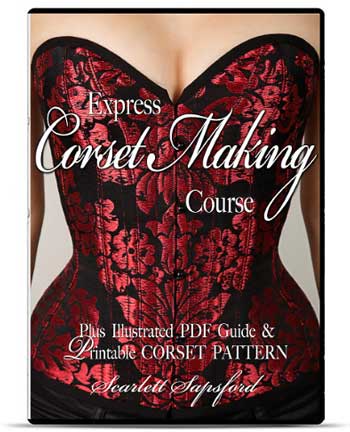
Learning how to make a corset training corset is very different to learning how to make corset style lingerie or fashion wear. This is not a direct issue when looking for a corset pattern to work from, unless you plan on relying solely on the instructions that come with it to make your corset. (For a comprehensive corset making course, check out my Express Corset Making Course for everything on how to make a corset for corset training purposes). So what are the most important things to look for in the construction of a corset training corset?
Well your highest priority should be the material it’s made from, also the number of layers of fabric. The corset bones, width, material and the number of bones used are important too. Then there are the eyelets, waist tape and laces that all need considering. Let’s look at each aspect in more detail.
Coutil – By far the best thing to make a corset from is coutil. This is a cotton fabric desgned specifically to make corsets from. It has a herringbone weave to it and little to no stretch. You want to get 100% cotton where possible as this allows the skin to breathe but polycotton blends are available. This fabric is normally available in white and black, with nude/beige being less common but you can dye the fabric easily. Satin coutil is also available in a variety of colors and patterns but can often be three times the price and lacks the herringbone weave, so is a little more prone to stretching. If you want a pretty outer fabric, the most popular method is just to add a layer of ‘fashion fabric’ which can be any fabric of your choosing (although stretch fabrics can be problematic). A heavy weight or upholstery fabric is best as it lays flatter and smoother on the curves of the body and adds support to the coutil layer.
Number of Fabric Layers – Opinions on how many layers a corset training corset needs are divided. I used to believe myself that waist training corsets needed at least two layers, but I have since bought antique corsets from the Victorian era that were clearly worn on a daily basis for tight lacing, but that comprise of just a single layer of coutil. A corset should at the very least be made of one layer of strong coutil, in which case boning should be increased in my opinion, but a two layer corset with the outer layer made of a sturdy decorative material and the inner one being of coutil is fine in my opinion. Although it won’t last as long as with two coutil layers or two coutil and a third outer layer of fashion fabric. It really is down to you but make sure you use heavy duty thread and double stitch your seams to avoid seams ripping. If you don’t know how to make multiple layered corsets, you’ll need to find a pattern with instructions on how to do this.
TBC in next post…